



























Need to work at home on your own schedule with competitive pay? Being a virtual assistant could be your solution. How To Land Your First 4 HIGH-VALUE Virtual Assistant Clients In The Next 30 Days, Even If You Have ZERO Experience! The formula is simple: Choose a high-demand skill set to become proficient in, learn the basics of the tools used for that skill, and begin pitching. Knowledge Requirements: No college degree necessary, just organization, reliability, and the ability to learn.
Quick TL;DR:
- Pick a niche (social media, bookkeeping, or e-mails).
- Master 3-5 essential tools (Google Workspace, Trello, Canva).
- Make a little portfolio and start pitching on Upwork or LinkedIn.
Let me show you how to do that, step by step, with templates you can copy and a week-by-week timetable.
What is a Virtual Assistant?
A virtual assistant (VA) is a self-employed assistant who offers administrative, technical, or creative assistance to clients remotely from a home office. Consider yourself someone’s right hand — but from your home office, rather than their office building.
Indeed says typical VA responsibilities include email handling, diary planning, travel arrangements, entering data, fielding inquiries from customers/clients (and even the initial stages of sales enquiries), social media posting, general bookkeeping, and administration of content in a CRM (customer relationship management) system. Some VAs specialise in a particular area, others provide a mixture of general admin services. The great thing about VA work is its flexibility – you choose your niche, the clients you work with, and your hours.
Who Should Become a VA?
Here’s where virtual assistant work could be a great fit if:
- A parent who wants to earn at home and control his/her family’s schedule.
- A pupil searching for part-time withdraw money between classes.
- A person with some administrative ability, perhaps from retail or the hospitality industry, who desires a remote job.
- A career switcher experimenting with entrepreneurship without huge startup costs.
- Someone who is organized and likes to help keep others on track.
Many career switchers enter the remote work world through writing before discovering VA work. Our guide on how to become a freelance writer from home covers a parallel path — and content VAs who can also write are consistently among the highest-earning specialists in the market.
Frequent self-test: Can you control your time? Are you an effective written communicator? Can you pick up new software with or without hand-holding? If the answer is yes to all three, you are prepared.
Core Skills & Specializations to Pick
Skills -Soft Skills: Communication, Organization, and Time Management
These are what matter, not fancy certifications. Clients pay VAs who are responsive, reliable, and don’t require a babysitter. Be proactive — learn to anticipate what your client needs before he or she asks.
Technical Skills: Tools You Need to Learn. Which of them do I need to learn?
You don’t have to become an expert, but you should be conversational in: (OK, maybe even a little fluent.)
- Google Workspace or Microsoft Office (Docs, Sheets, Calendar, and Drive).
- Project management: Trello, Asana, or ClickUp.
- Communication: Slack, Zoom, Microsoft Teams.
- Fundamentals of design: Canva for quick graphics.
- Scheduling tools: Calendly or Acuity.
- WordPress fundamentals (useful for content VAs).
If you are new to Google Workspace, our complete Google Workspace setup guide for small businesses walks through exactly how to use Drive, Docs, Sheets, and Calendar as a professional — the same tools your clients will expect you to master from day one.
Many of them have free plans. Dedicate a weekend to clicking around each.
For more structured skill-building, our comparison of Coursera vs Udemy for professional development helps you decide which platform offers the best VA-relevant courses — from Google Workspace certification to social media management — without overpaying for training you do not need.
High-Value Specializations
Generalist VAs earn $15-25/hour. Specialists earn $30-60/hour or more. There are three basic starter niches that all have robust demand:
Social Media VA: You’d schedule posts, get involved in comments, a little bit of fiddling around with basic graphics on Canva, and a bit of following up on how the post is going. Businesses want a steady social presence but don’t want to do it themselves.
E-commerce VA: Product listing, stock management updates, order processing & customer service emails. Great for anyone who has ever worked in retail or customer service.
Email management VAs who also understand AI tools have a significant edge in 2026. Our guide on using ChatGPT to write and manage professional emails covers the workflows that help VAs handle high-volume inboxes in a fraction of the time — a skill worth highlighting in every pitch.
Bookkeeping VA: Invoice tracking, expense categorization within QuickBooks or Wave, minimal reconciliation. You don’t have to be a certified accountant — small businesses are only required to keep good records.
Pick one. When you specialize, it makes it easier to be hired and demand higher rates (Indeed, Time etc in their career advice for VAs).
Virtual Assistant Salary by Niche — What You Can Actually Earn
 Most salary guides give you one vague number. Here is what VAs actually earn, broken down by niche and experience level, based on Indeed salary data and real VA community reporting.
| VA Niche | Beginner (0-12 months) | Mid-Level (1-2 years) | Experienced (3+ years) |
| General Admin | $15-20/hr | $20-30/hr | $30-45/hr |
| Social Media VA | $20-30/hr | $30-45/hr | $45-65/hr |
| Email Management VA | $18-25/hr | $25-40/hr | $40-60/hr |
| E-commerce VA | $18-28/hr | $28-42/hr | $42-65/hr |
| Bookkeeping VA | $25-35/hr | $35-55/hr | $55-80/hr |
| Executive/OBM VA | $35-50/hr | $50-75/hr | $75-100+/hr |
| Podcast Production VA | $30-45/hr | $45-65/hr | $65-90/hr |
| Pinterest/SEO VA | $25-40/hr | $40-60/hr | $60-85/hr |
Annual earnings at full-time (30-40 hrs/week):
- General admin VA, beginner: $23,000-$35,000/year
- Specialized VA, mid-level: $45,000-$70,000/year
- Senior specialist or OBM: $80,000-$120,000+/year
Regional rate adjustments:
- US/Canada: Use the table above as your baseline
- UK/Europe: Adjust to £12-20 entry, £25-55 specialist
- Australia: AUD $22-35 entry, AUD $50-90 specialist
- Low-cost-of-living countries: $10-20/hour is competitive and sustainable
No-Experience Path: Quick Micro-Projects to Build a Portfolio
Here’s the difference most guides overlook: you can build portfolio samples without real clients in 1-2 weeks.
Here are five micro-projects for your weekend:
Social Media Example: Develop a 5-post content series for an imaginary coffee shop. Add captions, hashtags, and a post schedule. Create one short image in Canva.
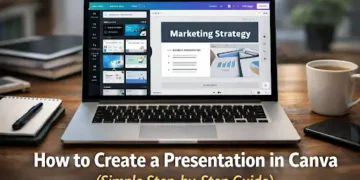
If you are not yet familiar with Canva, our beginner guide on how to create professional presentations in Canva covers the design fundamentals that social media VAs use daily — and those skills transfer directly to creating client-ready graphics and reports.
Trello Board Demo: Create a project management board to “launch a podcast,” with (Ideas, Recording, Editing, and Published) columns and sample task cards.
Cleaning Out Your Email Inbox: Use your messy inbox. Create folders, filters, and templates. Screenshot the before/after. Write a one-pager for your system.
Basic Landing Page: Create a one-page “About Me” website for an imaginary consultant using Card or Google Sites. Takes 2 hours max.
Best Labor Bookkeeping Sample scenario — Let’s build a simple expense tracker in Google Sheets with categories, formulas, and a monthly summary chart.
Just give them to me in a basic Google Drive folder or personal site. They demonstrate you can do the work, in fact.
Collecting initial testimonials: See if a friend, family member, or local nonprofit will let you help with something small (like make a social media post or organize their inboxes) in exchange for a written testimonial. Do exceptional work. No certificate is worth more as a reference than that.
Tools & Home Office Setup
Minimum gear:
- Good laptop (does not have to be new)
- Nice headset and microphone for Zoom calls
- High-speed internet (take the test at fast. com—aim for 25+ Mbps)
- Quiet workspace with decent lighting
Essential free tools:
Google Workspace (free with a Gmail account) includes Drive, Docs, and Sheets.
- Trello (free plan is plenty)
- Zoom (free for 40-minute calls)
- Canva (free plan for graphics)
- Source: Wave or Invoice Ninja (both free invoicing)
- Toggl Track (time tracking)
- LastPass or Bitwarden (password manager)
Many growing businesses also use all-in-one management platforms. Understanding how platforms like HQPotner centralize business tasks gives you an advantage when onboarding clients who use these systems — VAs who navigate multiple business management platforms confidently command higher rates.
Startup cost: $0-50, if you have internet and a laptop. It is one of the easiest remote businesses to start.
Pricing, Packages & Sample Rates
How to Set Your Rates
There are three pricing models for VAs:
Hourly: Simplest for beginners. Track time, bill monthly. Nice work for variable hours, but it can be a little big brother.
Retainer: Client pays a monthly flat fee for X hours or deliverables. Predictable income, clients love predictability.
Pricing packages: “Social media management package: $500/month for 12 posts, 3 graphics, daily engagement.” You sell the result, not your time.
Begin by billing hourly for your first 2–3 clients, then move to retainers as you know how long things really take.
Sample Beginner Rates by Region & Niche
According to Indeed’s virtual assistant salary data, entry-level VAs in the US earn $15-25/hour with annual full-time salaries of $35,000-$65,000 depending on niche and client base.
- General admin (US/Canada): $15-25/hour
- General admin (UK/Europe): £12-20/hour
- Specialized VA (social media, bookkeeping): $25-40/hour
- Specialist VA (3yrs +, specific niche): $40-75+/hour
If you’re in a low-cost-of-living country, you could probably charge the equivalent of $10-20/hour and still be competitive. If you’re in San Francisco, “don’t undervalue yourself at $15 — you’ll get the worst clients.
Rate Negotiation Script
When clients tell you your rate is too high:
“I understand the budget is important. My rate is based on my expertise in [your niche] and the return I deliver for you in [specific result—time saved, money made, work done without mishap]. I’m confident that you’re going to see yield in the first month. How about a trial week at a slightly lower rate — might that help you see the value of my work?”
Alternatively: “My rate is firm for standard packages, but if you are willing to commit to ongoing coaching for an initial three months, then I can offer a special 3-month rate at $X if you would like to get that locked in.”
Find Your First Clients — 8 Tactical Channels & Templates
Freelance Platforms: Upwork, Fiverr
Upwork profile winning template:
Headline: “Organized Virtual Assistant | Email & Calendar Management | Quick & Efficient”
Overview (keep under 300 words):
“I help overwhelmed business owners save 10+ hours a week by taming their inbox, scheduling like a pro, and keeping projects in motion.
What I do:
- Email management & inbox zero protocols
- Assist in calendar management & scheduling meetings
- Travel booking & preparation of itinerary
- Data entry & CRM updates
- Basic social media scheduling
I’m detail-oriented, have excellent communication skills — including being proactive and direct in communication — and I enjoy organizing tasks that most people find boring. Available [your hours/timezone].
Job proposal template (250 words max):
“Hi [name],
I stumbled on your job request for assistance with [this particular task]. I have similar work experience to what you ask for [relevant experience or micro-project sample], and I’m confident that I can do it perfectly.
Here’s how I would go about your project:
[Specific step (in your example, all you needed to do was show that you understood what they were looking for)
[Second step]
[Outcome they’ll get]
I can work your timezone/hours, start asap. I charge $[X]/hour, and I believe this project would take me about [Y] hours.
Sample of what I found attached. Happy to answer any questions.
Looking forward to working together,
[Your name]”
LinkedIn Outreach Template
 Discover small business owners, consultants, or agency founders within your niche. Send this:
“Hi [name],
I stumbled onto your [company/content], and I loved the way you tackled [specific thing].
I’m a [your niche] virtual assistant and I help [their type of business] manage [specific tasks they do for their work] so that they can focus on [their core work].
I don’t know whether pain point is an issue for you right now — but if managing it ever gets in the way, I’d love to chat about how I can help.
Either way, great work!
[Your name]”
Don’t sell hard. Start a conversation. The most exciting clients come from warm relationships.
Facebook Groups & Niche Forums
Join “Virtual Assistant Jobs,” “Freelancers,” and other industry groups (real estate VAs, ecommerce VAs, etc.). Public answer first with supportive advice, then DM when someone posts a need:
“Hey, saw your post about [problem]. I do this, in fact — happy to send a brief proposal if you’re interested in assistance. No pressure either way!”
Cold Email for Local Small Businesses
Subject: “Quick question about [their business type] admin.”
“Hi [name],
I’m a virtual assistant who works with [their industry] businesses in [your area], helping them handle [specific task] without hiring full-time staff.
I noticed [specific observation about their business—maybe they’re active on social media, recently expanded, etc.].
If you ever need help with [task], I’d love to send you my rates and a sample of how I work. If not, no worries—just wanted to reach out.
Best,
[Your name]
[Quick link to your portfolio or LinkedIn]”
Send 10 of these per week. Expect a 5-10% response rate.
Time, etc., & VA Agencies vs Freelancing
According to Time, etc., working through an established VA agency provides steady work and built-in clients but pays less (they take a cut). You’ll earn $12-20/hour but have guaranteed hours.
Freelancing directly gives you higher rates ($25-50+/hour) but requires you to find clients yourself.
My take: Start freelancing to learn client management and pricing. Consider agencies only if you need a stable income immediately.
First Client Onboarding & Contract
This is where most new VAs fumble. Smooth onboarding = happy clients who stay and refer.
Intake Form Fields to Collect
Create a Google Form with these questions:
- Business name and your role
- Main goals for hiring a VA
- Specific tasks you want me to handle (rank by priority)
- Tools/platforms I’ll need access to
- Preferred communication method (email, Slack, Zoom check-ins)
- Deadlines or time-sensitive deliverables
- How do you measure success?
Simple Proposal Template
Project: [Service name]
Deliverables:
- [Specific task 1]
- [Specific task 2]
- [Specific task 3]
Timeline: [Start date] – [End date or ongoing]
Rate: $[X]/hour or $[Y]/month retainer
Payment terms: Net 15, invoiced [weekly/monthly]
Communication: [Slack daily check-ins, weekly Zoom call, etc.]
Next steps: Reply to confirm, then I’ll send the contract and invoice for the first payment.
Contract Clauses to Include
- Scope: “Services include [list]. Additional requests outside this scope will be quoted separately.”
- Payment: “Invoices due within 15 days. Late payments are subject to 5% fee.”
- Confidentiality: “I will not share any business information with third parties.”
- Termination: “Either party may terminate with 14 days’ written notice.”
Use a simple template from Bonsai or And Co. Don’t overthink it for small clients.
According to EmilyReaganPR’s guidance on VA business practices, having standardized onboarding templates reduces scope creep and improves client retention dramatically.
90-Day Roadmap (Week-by-Week Checklist)
Month 1: Foundation & First Client
Week 1:
- Pick your niche
- Complete 2 micro-projects for portfolio
- Set up Upwork/Fiverr profile
- Write LinkedIn headline and summary
- Create proposal template
Week 2:
- Apply to 20 jobs on Upwork
- Send 10 LinkedIn outreach messages
- Post value-first content in 5 Facebook groups
- Set up an invoicing system
Week 3-4:
- Follow up on applications
- Do discovery calls with interested clients
- Send proposals to 5-10 prospects
- Land first client (even if small)
- Deliver exceptional onboarding
- Ask for a written testimonial
Month 2: Refine & Raise Rates
- Refine your niche based on what tasks you enjoy
- Build template library (5-10 reusable documents/processes)
- Apply for 10 more jobs at 20% higher rate
- Upsell current client or add one new client
- Create a case study from the first client success
Month 3: Scale & Systematize
- Offer retainer packages to current clients
- Create a simple lead magnet (one-page service menu + pricing guide)
- Set up a basic website or a LinkedIn featured section
- Build an email list for future marketing
- Consider raising rates 30% for new clients
Download the printable checklist: [Create a Google Doc with these tasks broken into daily actions]
Scaling: From Solo VA to Niche Specialist or Agency
Once you’re consistently booked 20+ hours per week, you have options:
Become a premium specialist: Charge $50-100+/hour by going deep in one valuable skill (Pinterest management, podcast production, executive calendar management).
Hire subcontractors: Keep client relationships but delegate routine work. You become the account manager. Charge client $40/hour, pay subcontractor $20/hour, keep $20/hour margin.
Create a micro-agency: Package services as “done-for-you” productized offerings. “Complete social media management: $1,500/month.” Hire VAs to deliver while you focus on sales.
When to make the jump? When you’re turning away work, raising rates doesn’t reduce demand, or spending more time doing work than finding clients.
Start Today
You now have everything you need: the skills list, the tools, the templates, and the 90-day plan. Most people fail not because they can’t do the work, but because they don’t start.
This week’s micro-tasks:
- Pick your niche (social media, email management, or bookkeeping)
- Complete one portfolio micro-project
- Set up your Upwork profile
- Send 5 applications or outreach messages
- Schedule 2 hours on your calendar for “VA business building” every week
The clients are out there. Small businesses are drowning in admin work and actively looking for reliable help. You just need to show up consistently, do solid work, and communicate clearly.
Your first client is closer than you think.
FAQs
Do I need certification to become a virtual assistant?
No. Clients care about results, not certificates. A strong portfolio of micro-projects beats any VA certification program.
How much can I realistically earn as a beginner VA?
Expect $15-25/hour in your first 3-6 months. Specialized VAs earn $30-60+/hour within a year. According to Indeed and Coursera salary data, full-time VAs typically earn $35,000-$65,000 annually, depending on niche and client base.
Can I work as a VA part-time?
Absolutely. Many VAs start with 10-15 hours per week alongside another job. Be clear about availability upfront.
Should I use Upwork or focus on cold outreach?
Use both. Upwork gets you fast experience and testimonials. Direct outreach builds better long-term client relationships and higher rates.
How do I handle taxes as a freelance VA?
Set aside 25-30% of earnings for taxes. Track all expenses (software, equipment, home office). Consult an accountant in your first year—it's worth the $200-400 fee.
What if I don't get hired right away?
Apply to 50+ jobs before getting discouraged. Improve your proposal each time. Consider lowering rates temporarily to get first testimonials, then raise them.