



























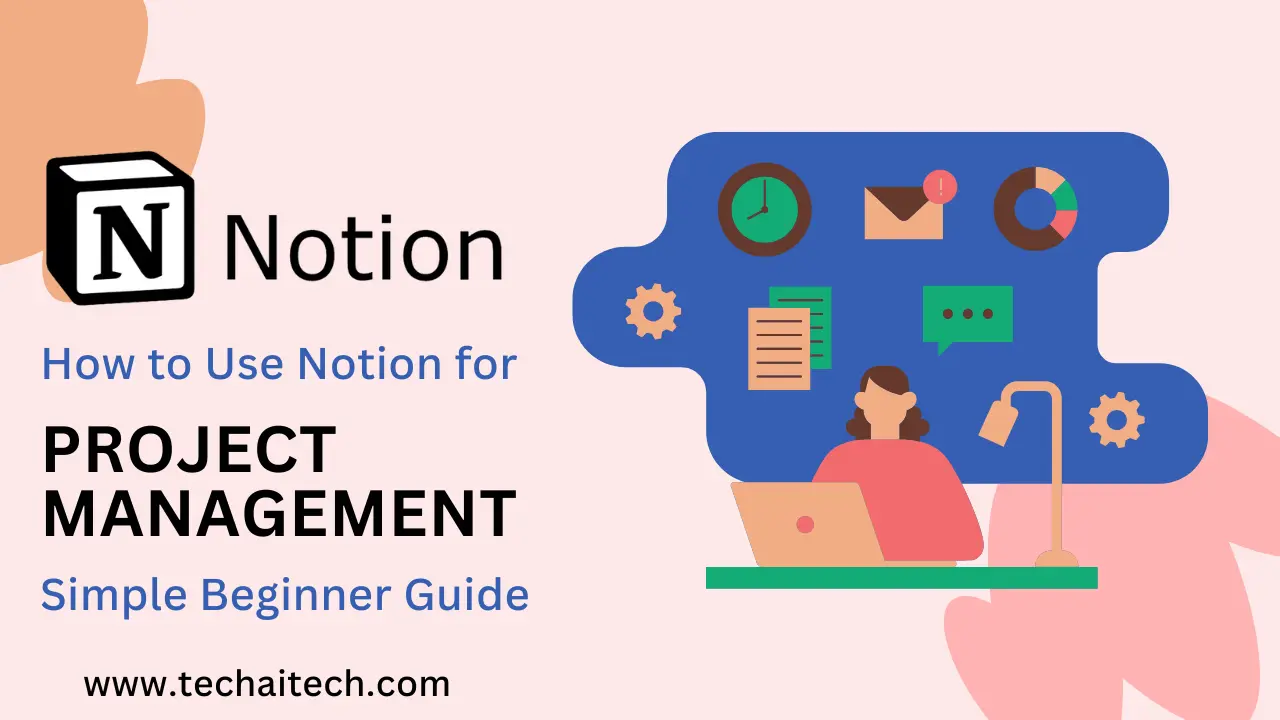
“Notion for project management” is becoming the best choice for beginners. There are various individuals who require a simple solution where they can plan projects, tasks, and deadlines without any stress. Notion offers just that, as long as one structures it properly.
When new users open Notion for the very first time, they get confused. There are no rules to follow. There are no boards to get started with. Just a blank sheet. This tutorial has been written to eliminate the confusion that arises when you start using Notion for project management.
If you are a student, part of a small team, or a freelancer, this tutorial is going to help you set up a functional project management system using Notion.
Quick Answer: How Notion Helps in Project Management (For Beginners)
Notion project management helps you organize projects, tasks, and plans in one place. You can see your work as a board, a list, a calendar, or a timeline. This makes planning easy and visual.
For beginners, using Notion for project management feels calmer than complex tools like Jira or Asana. You start small. You grow slowly. Nothing feels forced.
What Makes Notion Good for Project Management?
Notion works like a flexible workspace. You are not locked into one system. You build what you need and ignore the rest. This is why beginners enjoy it.
Some key reasons people choose Notion for project planning include:
- Everything lives in one workspace
- Easy task and project tracking
- Multiple views like Notion board, calendar, and timeline
- Ready-to-use Notion templates for project management
Unlike many tools, Notion adapts to your workflow instead of changing how you work.
Basic Notion Concepts Beginners Must Know
Before building a system, you need to understand a few simple ideas. These are the foundation of Notion task management.
A page in Notion is like a folder. It holds content. Inside pages, you can add databases. Databases are where your projects and tasks live. They look like tables but behave like smart systems.
Each database has properties. These are fields like status, due date, or priority. Views control how data looks. You can switch between table, Notion kanban view, calendar, or timeline without losing data.
Relations connect tasks to projects. Rollups show progress automatically. You do not need to master these today, but knowing them helps you grow later.
Planning Your Project Management Setup (Beginner Friendly)
 Many beginners fail because they copy advanced setups. Those systems look nice, but are hard to maintain. A simple plan always works better.
Start by deciding what you want to track. Ask yourself simple questions. Do you need projects? Do you need tasks? Do you need deadlines?
For students, a basic setup works best. Track subjects, assignments, and due dates. Freelancers should track clients, projects, and tasks. Small teams should track ownership and progress. Notion for small teams works well when systems stay simple.
Avoid adding too many properties. Start small. Improve later.
Step-by-Step: How to Set Up Notion for Project Management
Step 1: Create Your Workspace
Open Notion. Create a new page. Name it “Project Management.” This page becomes your main workspace. Inside this page, add a full-page table.
This is the first step in setting up the Notion workspace correctly.
Step 2: Create a Project Database
This table becomes your Notion project database. Each row is one project. Keep it simple.
Beginner-friendly properties include:
- Project Name
- Status
- Due Date
- Priority
- Notes
This database helps you see all projects in one place. It also becomes the base for dashboards and reports.
Step 3: Create a Task Database
Now, create another table for tasks. This is your Notion task management system. Each row is one task.
Add a relation property to connect tasks with projects. This step is crucial. It offers you to track progress & see which tasks belong to which project.
This is the core of how to manage tasks in Notion properly.
Using Notion Views for Better Project Planning
Views change how you see your work. They make planning easier and clearer.
A Notion kanban view groups tasks by status. It is perfect for daily tracking. A table view helps with detailed planning. A Notion calendar view shows deadlines clearly and prevents missed tasks.
A Notion timeline view works like a roadmap. It is ideal for long-term projects and planning milestones. Beginners should start with two views and add more later.
Understanding which Notion views are best for project management creates a big change.
How to Create a Project Dashboard in Notion
A dashboard gives you a clear overview. To build one, create a new page titled “Dashboard.” Add linked databases from your projects and tasks.
Filter the dashboard to show active projects and tasks due soon. This creates a calm and focused workspace. A clean Notion project dashboard saves time and reduces stress.
You can also add template buttons. These buttons help you create new projects quickly and easily. This improves consistency and speed.
Simple Automation Examples Inside Notion

Notion includes basic automation features. These are easy to use. You can auto-update task status or highlight overdue tasks.
For advanced automation, tools like Zapier or Make work well. They are also known as best data connectors for project management tools with Notion. You can sync tasks with calendars or collect tasks from forms.
Automation saves time and reduces manual work.
Notion Project Management Templates for Beginners
Templates are perfect for beginners. They give you a ready-made system. You learn by using, not by guessing.
Popular beginner templates include
- Personal project planner
- Freelancer project tracker
- Team workspace
- Notion roadmap template
Free templates help you start fast and avoid mistakes. They also improve confidence.
Real-Life Use Cases
Students use Notion project tracker systems to manage assignments and exams. Freelancers use Notion for project planning to handle clients and deadlines. Teams use shared dashboards for collaboration and visibility.
This flexibility is why Notion is good for project management for beginners, which is often answered with yes.
Common Beginner Mistakes and Fixes
Many beginners add too many fields. This creates confusion. The fix is simple. Remove what you do not use.
Another mistake is not linking tasks to projects. This breaks tracking. Always connect tasks properly. Some users confuse pages with databases. Remember, databases store data. Pages organize it.
Skipping dashboards is also common. One overview page changes everything.
Notion vs Trello for Beginners
When comparing Notion vs Trello for beginners, Trello feels easier at first. It uses fixed boards. Notion takes more time but offers more control.
If you want long-term flexibility, Notion wins. If you want instant simplicity, Trello works. Many users eventually move from Trello to Notion.
Conclusion
Notion for project management is powerful when used the right way. You do not need complex systems. You need clarity. Start small. Stay consistent. Improve slowly.
With the right setup, Notion becomes a calm place where your projects feel manageable and clear.
FAQs: Notion for Project Management
Is Notion best for project management?
Yes. It works well for beginners & advanced users.
Can beginners use Notion easily?
Yes, if they start easily.
What is the best Notion setup for beginners?
One project database, one task database, & one dashboard.
Can Notion replace Trello?
Yes, for most personal & small team use cases.