


































What Does “Nometre” Mean?
Okay, straight to the point.
“Nometre” is not a real scientific term. Full stop. It does not exist in the International System of Units. No physics textbook uses it. No engineering standard references it. Nothing.
If you have been reading articles online that treat it like some advanced measurement concept or a cutting-edge technology platform, those articles made that up. There are no citations behind them because there is nothing to cite.
So where does the word come from? Mostly confusion. Some people mistype “nanometre” and land on “nometre.” Some content websites built articles around that misspelling to pull in search traffic. And now here we are — dozens of pages online confidently explaining a term that does not actually exist.
The Real Unit — Nanometre
The word people are almost always looking for is nanometre. Abbreviated as nm.
One nanometre equals one billionth of a metre. Written out scientifically: 10⁻⁹ m. It is a proper, officially defined unit that has been used in science and engineering for a long time.
How small is that exactly? Here are some real examples.
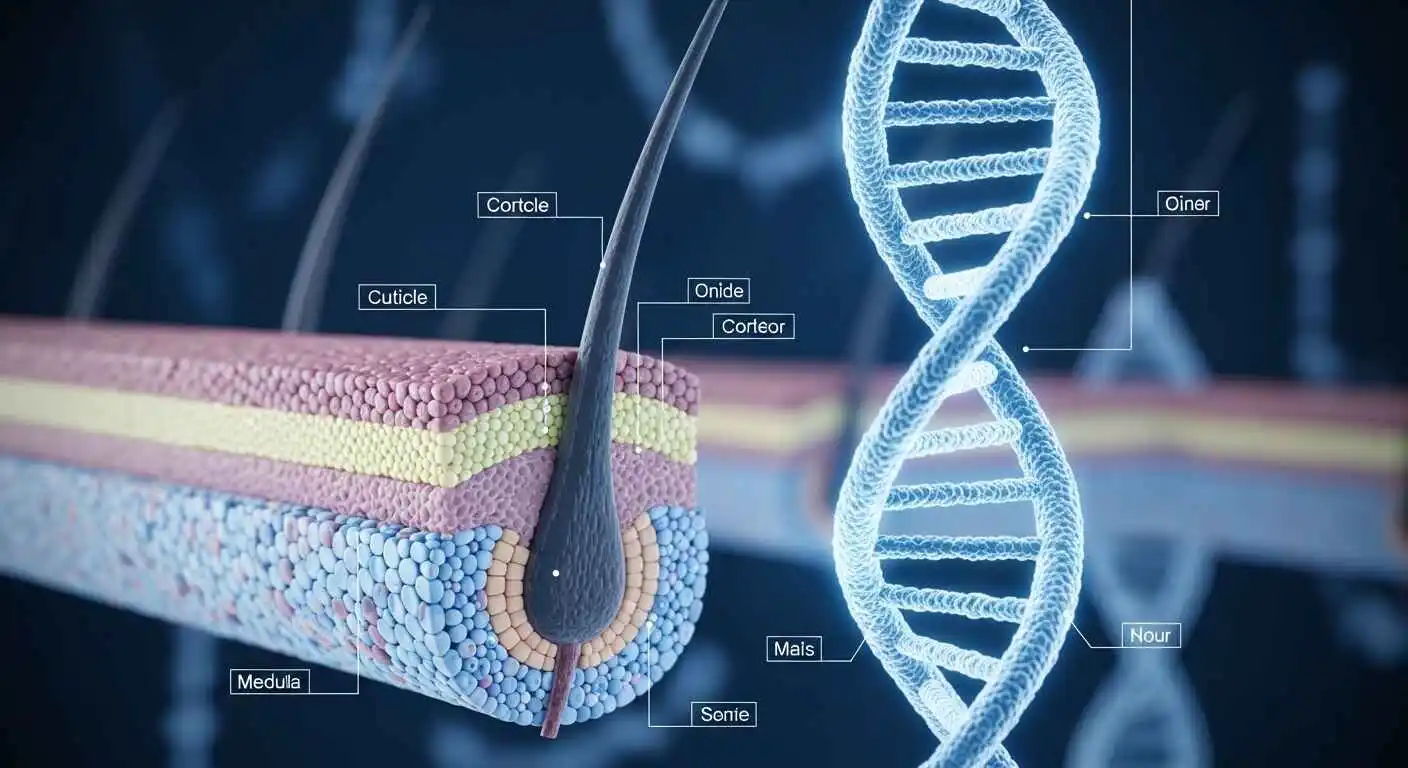
A human hair is roughly 80,000 nanometres wide. A single DNA strand measures about 2 nanometres across. Most viruses fall somewhere between 20 and 300 nanometres. And the transistors inside your phone? Some of them are now 3 nanometres. Three. That is smaller than most viruses. Smaller than some proteins.
That is the scale nanometres deal with. It is genuinely mind-bending when you actually think about it.
For comprehensive information on nanoscale measurements and standards, visit the National Institute of Standards and Technology (NIST).
Visualizing the Nanometre Scale
To truly understand how small a nanometre is, here’s a scale from largest to smallest:
| Object | Size (Nanometres) | Visual Comparison |
| Human Hair | ~80,000 nm | Visible to the naked eye |
| Red Blood Cell | ~7,000 nm | Visible under a light microscope |
| Bacteria (E. coli) | ~2,000 nm | Light microscope |
| Virus (Influenza) | ~100 nm | Electron microscope needed |
| Protein Molecule | ~10 nm | Electron microscope |
| DNA Double Helix | ~2 nm | Advanced imaging |
| Water Molecule | ~0.3 nm | Theoretical models |
| Hydrogen Atom | ~0.1 nm | Atomic scale |
Context: If you scaled a nanometre up to the size of a marble (1 cm), a metre would be the size of Earth.
For detailed research on nanotechnology and nanoscale measurements, Nature’s Nanotechnology journal provides peer-reviewed scientific articles.
So, Why Do People Keep Using “Nometre”?
 Good question. A few reasons.
The most common one is just a typo. “Nanometre” and “nometre” look similar enough that people searching in a hurry get them wrong. Search engines usually correct this, but some websites decided to build content around the mistake instead of fixing it.
Then there are the content farm articles. You have probably seen this type. Long, confident, full of vague language — but when you look for actual sources or citations, there are none. Several sites have written entire pieces about “nometre technology” or “nometre devices” that do not exist anywhere in the real world. No manufacturer makes a “nometre device.” No research institution studies it. The articles are purely for clicks.
Ethical content monetization means creating genuine value, not chasing misspellings for traffic. Our blog monetization guide emphasizes building authority through accuracy—long-term audience trust beats short-term SEO tricks every time.
There is also a smaller, more interesting use of the word in some online communities. Some people use “nometre” as a kind of ironic or philosophical expression — the idea of something that cannot or should not be measured. Privacy. Silence. Opting out of a world that tracks everything. In that sense, it works as a cultural concept. But that is very different from it being a scientific term.
The philosophical appeal of ‘nometre’ as ‘unmeasurable’ resonates with privacy advocates who resist constant tracking. Our two-factor authentication guide explains how to secure accounts while maintaining privacy—balancing security with the desire to remain ‘unmeasured’ in digital spaces.
The Fake Etymology — Debunking False Claims
Some articles online claim that “nometre” derives from the Greek word “nomos” (νόμος), meaning law or measure. This is completely fabricated.
Here’s the actual etymology:
Nanometre comes from:
- “Nano” = Greek for dwarf (νάνος, nanos)
- “Metre” = Standard SI unit of length, from Greek metron (measure)
There is no legitimate Greek or Latin root for “nometre” as a measurement term. The supposed connection to “nomos” was invented by content writers trying to make a fake term sound credible.
This is a common tactic in misinformation: invent plausible-sounding etymology to give fake concepts academic legitimacy.
What Are People Actually Looking For?
When you search “nometre,” you’re probably looking for one of these:
1. Nanometre (90% of searches)
- Scientific measurement unit
- One billionth of a metre (10⁻⁹ m)
- Used in nanotechnology, physics, biology, and semiconductor engineering
Solution: You meant “nanometre” — this article explains it above.
2. Micrometer/Micrometre (5% of searches)
- Sometimes confused with nanometre
- One millionth of a metre (10⁻⁶ m)
- 1,000 times larger than a nanometre
- Used in manufacturing, quality control
Solution: If you’re measuring in the 1-1000 micrometre range, you want “micrometre”, not nanometre.
3. Non-Metric Measurements (3% of searches)
- Imperial system (feet, inches, yards)
- Confusion between “no metre” and “nanometre.”
Solution: If you need non-metric measurements, you’re looking for imperial/US customary units, not “nometre.”
4. Odometer/Nomometer (2% of searches)
- Vehicle mileage instrument
- Sometimes misspelled as “nomometer” or “nometre.”
Solution: You meant “odometer” — the instrument that measures distance traveled in vehicles.
What Real Precision Measurement Looks Like
 Since “nometre” keeps getting linked to ideas of precision measurement, here is what that actually means in practice.
Measuring things at the nanoscale is not simple. It requires specialised equipment that most people outside of research labs never encounter.
Micrometers can measure down to one millionth of a metre. Commonly used in manufacturing for quality control.
Laser interferometers use the wavelength of laser light to detect distances smaller than a single nanometre. The precision is extraordinary.
Atomic Force Microscopes scan surfaces at the atomic level. They can resolve features just fractions of a nanometre in size.
Scanning Electron Microscopes use focused electron beams to image surfaces at nanometre resolution. Those detailed close-up images of microchips or insects you have seen? Usually these.
All of these operate within proper, standardised measurement science. None of them involves anything called a “nometre.” The nanometre is the unit. The instruments above are the tools. That is how it actually works.
The Cultural Side of It
Language does weird things on the internet. A word gets used enough times, and it starts to feel real — even if nobody ever defined it properly.
“Nometre” is a good example of that. It spread through repetition. Someone wrote about it, another site picked it up, and suddenly, there are multiple pages online treating it as fact.
There is also something understandable about why a word like this might resonate with people. We live in a world where everything gets measured. Your screen time. Your steps. Your engagement rate. Some people push back against that. And a term that plays with the idea of the unmeasurable — “no metre,” nothing to measure — has a certain appeal in that context.
Fair enough. But that is a cultural thing, not a scientific one. And the two should not get mixed up.
Nanometre vs Nometre — Side by Side
| Nanometre (nm) | Nometre | |
| What is it? | One billionth of a metre | No official definition |
| Where is it used? | Science, engineering, technology | Informal and online use only |
| Is it standardised? | Yes — official SI unit | No |
| Is it real? | Yes | Not as a scientific term |
Real-World Applications of Nanometre-Scale Measurement
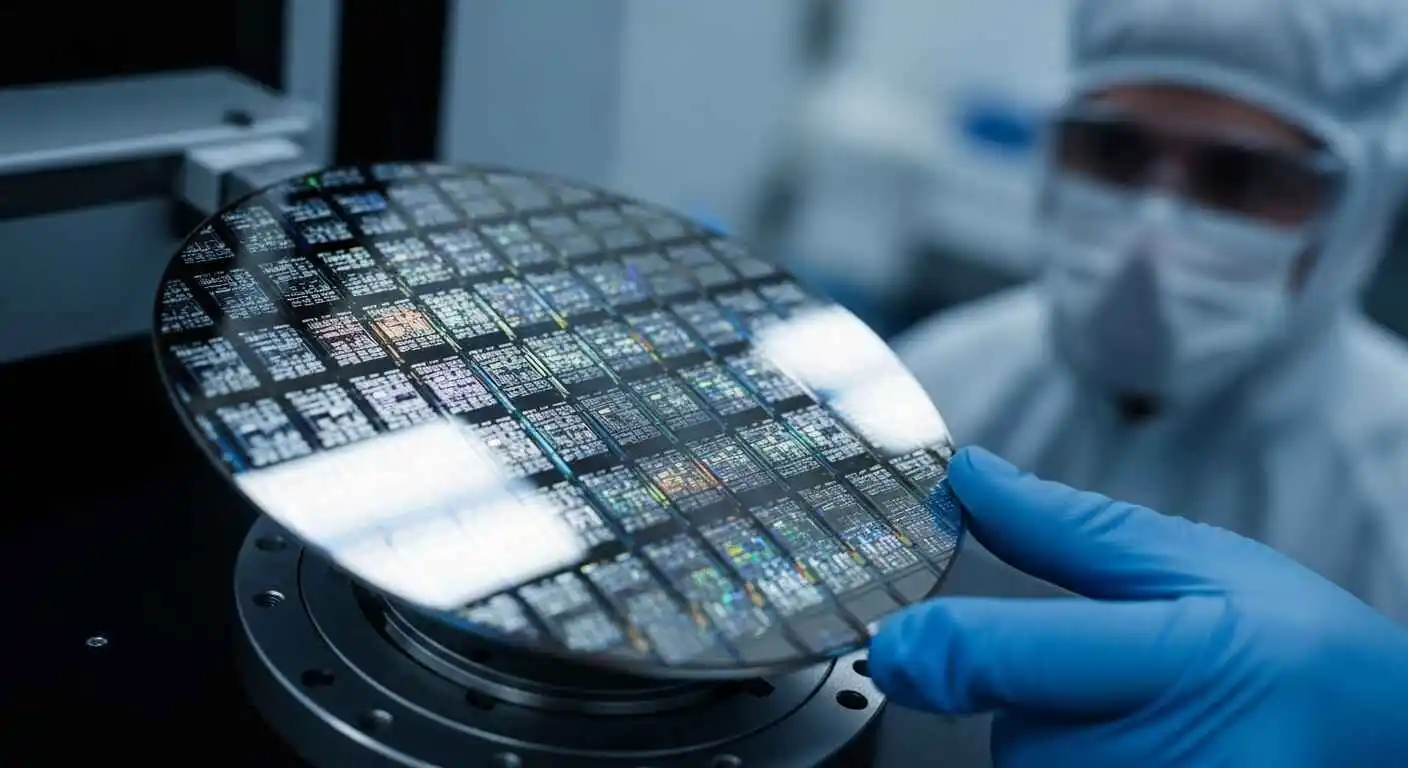 Since the confusion around “nometre” often involves precision technology, here’s what actual nanometre-scale work looks like:
Semiconductor Manufacturing
Modern processors use 3nm and 5nm transistor nodes. These measurements are actual nanometres—the gate length of transistors is measured in single-digit nanometres.
Why it matters: Smaller transistors = more processing power, less energy consumption
Medical Diagnostics
Viruses are measured in nanometres:
- COVID-19: ~100 nm diameter
- Influenza: ~80-120 nm
- HIV: ~120 nm
Understanding viral size at the nanometre scale is critical for designing filters, developing vaccines, and creating diagnostic tests.
Materials Science
Graphene sheets are 0.335 nm thick—essentially a single layer of carbon atoms. Precise nanometre measurements enable researchers to create new materials with extraordinary properties.
Optical Technology
Wavelengths of visible light:
- Red light: ~700 nm
- Green light: ~550 nm
- Blue light: ~450 nm
Nanometre precision in optics enables fiber optics, laser technology, and advanced cameras.
Bottom Line
There’s no such thing as a “nometre”. Not scientifically, not technically, not in any standardised sense. What’s real is the nanometre, a properly defined, universally accepted unit of measurement that sits at the heart of modern science and engineering. Depending on what you’re reading this with, the chips in your laptop to the proteins in your blood, nanometres are everywhere.
The word “nometre” is not. If you came here genuinely confused by what you read elsewhere, that’s understandable. There’s a lot of content online that presents made-up concepts with total confidence. This article does the opposite – here are the actual facts, and they’re pretty simple.
Nanometre = real. Nometre = not a real scientific term. That is the whole story.
Common Questions
Is nometre a real unit of measurement?
No. No official measurement system has a definition of it. The SI unit most likely coming to your mind is nanometre, which is one billionth of a metre.
What is a nanometre?
It is 10⁻⁹ metres. A measurement that is one billionth of a meter. Delves into the atomic and near-atomic scale, this theory finds widespread application in physics, chemistry, biology, and engineering. The nanometre is a standard measure for semiconductor transistors, DNA strands, and wavelengths of light.
.
How small is one nanometre really?
Very small. A human hair is over 80,000 nanometres wide. A DNA strand is 2. A modern phone chip transistor is 3 to 5. At this scale, you are dealing with individual atoms. A single gold atom is about 0.3 nanometres across.