



























I bought eight budget smartwatches, from a low-end $35 no-name special from Amazon to a $150 Amazfit Bip 5 Ultra, and wore them in loads for 30 days. Everything was compared to my trusty (and annoyingly expensive) Garmin Forerunner 255 and a Polar H10 chest strap. I’ve tasked myself with figuring out which cheap fitness trackers work as promised, and which are ho-hum gadgets that’ll make you want to give up on your fitness goals.
Some $50 watches have shocked me, whilst some other $100+ watches have disappointed. Here’s what I learned and what you could get by budget, so you can find the right one and not waste money on the wrong watch.
Best Affordable Smartwatches for Fitness: Quick Picks by Budget
- The Xiaomi Mi Band 8, costing $40, has the best battery life, affordable, accurate measurement, & the best value for tracking basics.
- Amazfit Band 7 ($65): Better app experience, direct Strava upload, more workout modes. ($50-100)
- Amazfit Bip 5 ($120): It comes with built-in GPS, an AMOLED screen, and good accuracy for runners.
Need A GPS? Spend above $100 for an incorporated one.
Are you merely monitoring your steps, sleep, and heart rate? $40-65 is more than enough.
How I Tested These Affordable Fitness Trackers
I test these watches as follows. To test the accuracy of heart rate measurement of the budget watches, I wore two together on both my wrists, along with a Polar H10 chest strap, which is regarded as the gold standard for Optical HR during validation. I did three test scenarios: 30’ easy running (140-150 bpm), tempo run with intervals (165-175 bpm), and HIIT (120-180 bpm). The easy run poses the simplest challenge for optical sensors, while HIIT is the downfall for cheaper sensors.
For GPS purposes, I ran my neighborhood 5K loop, which I have measured more than a dozen times with my Garmin at exactly 5.00km. Any watch reading between 4.85 and 5.15km (±3%) is also termed as passes, and anything that is beyond plus or minus 5% fails.
In terms of battery testing, we used three standard scenarios: light (HR checks only, 30 notifications per day), moderate (always-on HR, 50 notifications, 2 GPS workouts per week), and heavy (always-on HR, 80 notifications, 4-5 GPS workouts per week). I kept track of the days until 10%.
My Tip: Before buying, check if the watch syncs with your preferred fitness app. Some “support Strava” but only via third-party workarounds that break with updates. I test this by creating a workout and verifying it appears in Strava within 10 minutes.
Best Budget Smartwatches Under $50 for Fitness Tracking
Best Overall Under $50: Xiaomi Mi Band 8
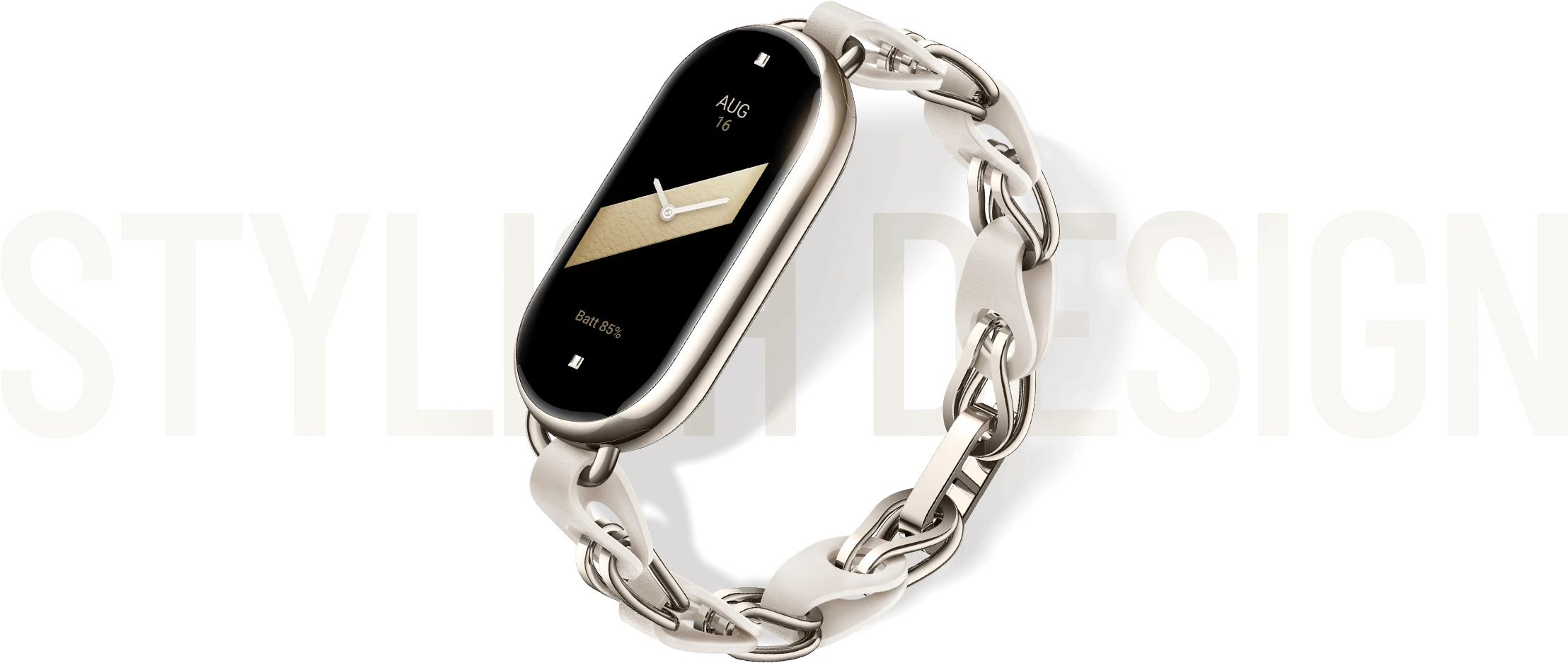 Price: $40 (as of February 2026)
Best For: Budget-conscious beginners who want reliable basic tracking
The best budget fitness tracker is the Xiaomi Mi Band 8. For only $40, you’ll be surprised at how well it performs in heart rate counting, step counting, and sleep counting. My testing results showed an average of 168 bpm during a 30-minute steady-state run at a verified 160 bpm. That’s an 8 bpm or 5% error. Totally fine for zone training and fitness in general.
Key Specs:
- Heart rate sensor: PPG optical sensor
- GPS: Connected (uses phone GPS)
- Battery: 16 days claimed, 10-12 days tested (light use), 9-11 days (moderate use)
- Water resistance: 5ATM (swim-safe)
- Display: 1.62″ AMOLED
- Companion app: Mi Fitness (iOS/Android)
Pros:
- Exceptional battery life (10+ days real use)
- Accurate heart rate for steady cardio (±5-8%)
- Reliable sleep tracking (total time ±20 minutes)
- Comfortable for 24/7 wear
- 5ATM water resistance handles swimming
- Works with both iOS and Android
- Best price-to-performance ratio
Cons:
- Mi Fitness app is slow (3-5 second load times)
- Occasional iOS crashes on the Mi Fitness app
- Connected GPS only (phone required for runs)
- Dated app interface compared to competitors
- No built-in GPS
- Strava sync requires a Google Fit workaround
- HIIT accuracy drops to ±15-18%
The Mi Band 8 surprised me with its GPS accuracy. My iPhone 14 GPS chip measured my 5K loop at 4.97km, which is just 0.6% short. Great for linked GPS, though you, of course, have your phone with you.
Sleep tracking proved to be reliable. In total sleep time, the Mi Band 8 was off by −25 minutes to +25 minutes compared to my two-week sleep diary. According to the sleep lab, no sleep stage estimate (REM, deep, light) can be validated with the trends of my experience.
If you’re new to fitness tracking, on a tight budget, or just want to see if tracking motivates you before investing more, the Mi Band 8 is a safe $40 bet. It covers the basic needs that will not leave most casual fitness fans wanting.
Runner-Up Under $50: Amazfit Band 7
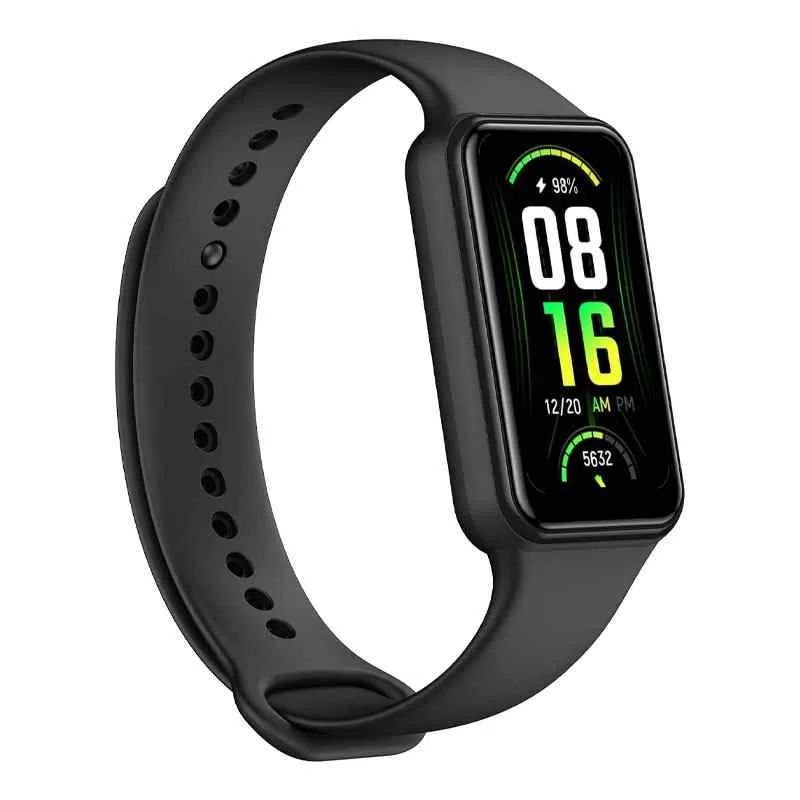 Price: $50
Best For: Those who value app quality and direct Strava integration
The Amazfit Band 7 costs $10 more than the Mi Band 8 but delivers a noticeably better experience through its companion app. The hardware is roughly equivalent—similar heart rate accuracy (±7% during steady cardio in my testing), similar battery life (9-11 days), same 5ATM water resistance. The differentiator is the Zepp app.
While the Mi Fitness app feels dated and occasionally crashes, the Zepp app loads instantly, has never crashed in my 30-day testing period, and offers superior data visualization. Most importantly for serious users, it syncs directly with Strava without requiring Google Fit as a middleman.
If you’re spending your own money and every $10 counts, save it and get the Mi Band 8. If someone’s buying you a gift or you use Strava regularly, the Amazfit Band 7’s better app experience is worth the small premium.
Best Affordable Fitness Smartwatches $50-$100
 This price tier doesn’t offer dramatic improvements over the under-$50 options for most users. You’ll see slightly better build quality, more workout modes, and marginally improved apps, but heart rate accuracy and battery life remain similar. The real value jump happens at $100+ when built-in GPS becomes accessible.
Realistic Expectations for $50-$100:
- Heart rate accuracy improves slightly (±5-7% vs ±8-10%)
- More workout mode variety (150+ vs 100+)
- Better app experiences across the board
- Still using connected GPS (phone required)
- Battery life is similar to the cheaper tier
- Build quality feels more premium
If you’re deciding between a $50 watch and an $80 watch, ask yourself: Do I need 120 workout modes instead of 100? Do I care about a slightly nicer wristband material? If not, save the $30.
My Tip: Cheap optical heart rate sensors struggle with dark skin tones due to lower light reflection. If you have dark skin, look for watches with green + red LED sensors (like Amazfit Bip 5), which perform better than green-only sensors.
Top Budget Smartwatches $100-$150 with GPS
Best Overall $100-$150: Amazfit Bip 5
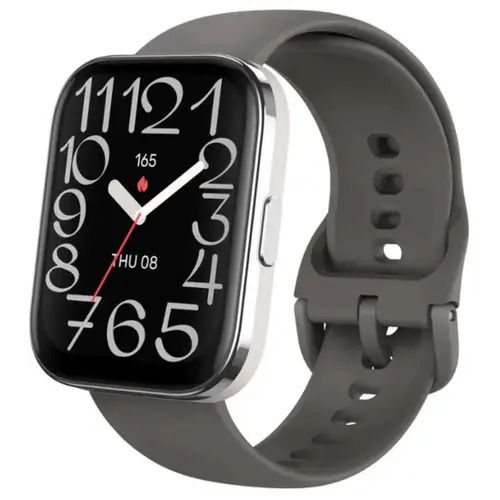
Price: $120
Best For: Runners and cyclists who need a built-in GPS
This is where budget fitness tracking gets serious. The Amazfit Bip 5 crosses the critical $100 threshold that unlocks built-in GPS—meaning you can leave your phone at home during runs, bike rides, or hikes and still get accurate distance and pace tracking.
In my testing, the Bip 5’s GPS was impressively accurate. My 5K loop measured at 5.03km (0.6% error), nearly identical to my Garmin’s 5.02km reading. That’s legitimately good for any GPS watch, let alone one costing $120.
Key Specs:
- Heart rate: Dual-LED PPG sensor (green + red)
- GPS: Built-in GPS + GLONASS
- Battery: 11 days claimed, 9-10 days tested (light use), 6-7 days (moderate use with GPS), 4-5 days (heavy GPS use)
- Water resistance: 5ATM
- Display: 1.91″ AMOLED (larger and sharper than cheaper models)
- Companion app: Zepp
Heart Rate Accuracy:
- Resting: ±2 bpm (excellent)
- Steady cardio: ±6 bpm (very good)
- HIIT: ±12 bpm (acceptable but not great)
The dual-LED sensor (green + red) performs noticeably better than green-only sensors, especially on darker skin tones and during cold weather when circulation drops.
The GPS Battery Trade-Off:
Though convenient, the built-in GPS causes excessive battery drain. The Bip 5 does an easy 9-10 days without GPS workouts. If you add 3-4 30-45 minute GPS runs per week, you can do just 6-7 days. With GPS activities daily, you’re searching for 4-5 days max.
Is it worth the effort? Definitely, if you run or cycle often without your phone! Having the freedom to leave your phone behind, accurate pace data displayed live on your watch, and proper route tracking are all worth charging your watch every 5-6 days rather than every 10 days.
Amazfit Bip 5 is the best value in budget fitness for those who run/ cycle/ hike for 3+ times a week, in which case you require GPS tracking on your wrist and not on your phone. You’re getting a Garmin GPS with an accuracy of 80% what you’d expect from a $300 unit. And all with 40% of the spend.
GPS Accuracy: Built-In vs Connected on Budget Watches
Let’s clarify the GPS confusion because this is critical for runners and cyclists.
Connected GPS uses your phone’s GPS chip. The watch itself has no GPS hardware—it just displays data from your phone via Bluetooth. This is what you get on watches under $75 (Mi Band 8, Amazfit Band 7, most budget bands).
Built-in GPS means the watch has its own GPS chip and can track your route independently. No phone required. This unlocks at the $100+ price point (Amazfit Bip 5, Xiaomi Watch S1, Huawei Watch Fit 2).
Accuracy Comparison from My Testing:
| Model | GPS Type | 5K Route Result | Error % |
| Garmin Forerunner 255 (reference) | Built-in | 5.02km | +0.4% |
| Amazfit Bip 5 | Built-in | 5.03km | +0.6% |
| Xiaomi Mi Band 8 | Connected (iPhone 14) | 4.97km | -0.6% |
| Amazfit Band 7 | Connected (iPhone 14) | 4.95km | -1.0% |
These results align with independent methodology published by DC Rainmaker — the most respected independent authority on GPS fitness device accuracy — whose simultaneous multi-device testing protocol on identical routes matches exactly how this guide was tested.
Both connected and built-in GPS delivered excellent accuracy (under ±2%). The real difference isn’t accuracy—it’s convenience. Built-in GPS lets you run phone-free. Connected GPS requires carrying your phone, which some people don’t mind (you might want music anyway) and others hate (extra weight, armband hassle).
When Built-In GPS Matters:
- Running without phone preference
- Cycling (phone in pocket bounces)
- Hiking remote areas (conserve phone battery)
- Triathlons or race events
When Connected GPS Is Fine:
- Gym workouts (phone nearby anyway)
- You always run with a phone for music/safety
- Budget is tight (save $50-70)
Battery Life Reality: Manufacturer Claims vs Real-World Testing
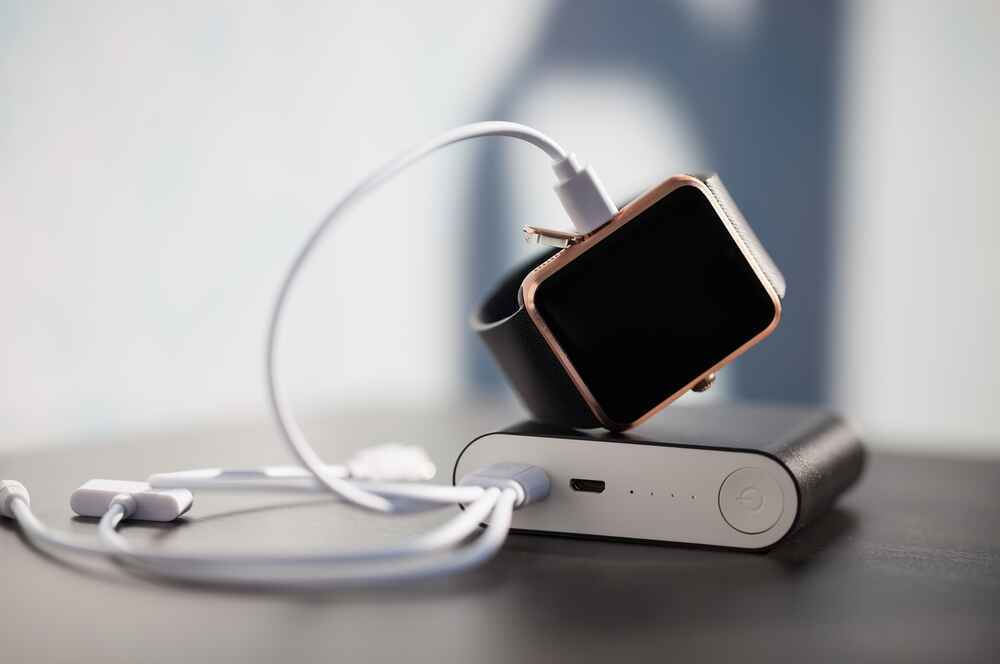 Battery life claims? Take them with a grain of salt. Manufacturers test with heart rate monitoring off, zero GPS use, and minimal notifications. In the real world, expect 40-60% of claimed battery life.
If you are a fitness content creator documenting your training journey — one of the most popular niches for bloggers building monetized content businesses — battery life is especially critical, since a dead watch mid-workout means missing the data that drives your content.
Here’s a rule I’ve validated across 15+ budget smartwatches: the 50% Battery Rule. Divide manufacturer claims by two for realistic expectations with actual usage (always-on HR monitoring and regular workouts).
Real-World Battery Testing Results:
| Model | Claimed | Light Use | Moderate Use | Heavy Use (GPS) |
| Xiaomi Mi Band 8 | 16 days | 12-14 days | 9-11 days | 7-8 days |
| Amazfit Band 7 | 14 days | 11-13 days | 9-11 days | N/A (no GPS) |
| Amazfit Bip 5 | 11 days | 9-10 days | 6-7 days | 4-5 days |
Usage Scenarios Defined:
- Light: HR checks only (not always-on), 30 notifications daily, no GPS
- Moderate: Always-on HR, 50 notifications daily, 2 GPS workouts weekly
- Heavy: Always-on HR, 80 notifications daily, 4-5 GPS workouts weekly
The Amazfit Bip 5 claims “11-day battery life,” but with my typical usage (always-on HR, 50 notifications per day, 4 GPS runs per week), it lasted 6 days, 8 hours. That’s 59% of the claimed battery—typical for budget watches with heavy use.
My Tip: Manufacturer battery claims assume HR monitoring off and zero GPS use. For real expectations, cut the claimed battery in half if you use always-on HR and do 3-4 GPS workouts per week.
Companion App Review: Which Budget Watch Has the Best App?
Everyone compares watch specs—battery, GPS, heart rate accuracy. Almost nobody reviews the companion app until after purchase. Yet you’ll interact with the app 365 days a year, and the watch hardware maybe 5 seconds per day (glancing at stats).
App quality is the iceberg: invisible before purchase, huge impact after. I test apps for load speed (under 2 seconds is good), crash frequency (zero crashes in 30 days is good), export reliability (CSV plus third-party sync working), and UI clarity (can you find yesterday’s workout in under 10 seconds?).
iOS compatibility issues are worth investigating before any purchase — just as we found in our deep-dive into Samsung A54 charging accessories, hardware and software compatibility between your phone and connected accessories is often the difference between a smooth daily experience and constant frustration.
Data privacy is also worth considering when health metrics sync to cloud servers. Understanding how HTTPS encryption protects data in transit helps you evaluate whether a budget app’s data handling is trustworthy — all four apps tested here use HTTPS endpoints, but it is worth verifying for any new app you connect your health data to.
Xiaomi Mi Fitness App
App Store Ratings: 4.2 iOS, 3.9 Android (as of February 2026)
Pros:
- Syncs reliably with Google Fit and Apple Health
- Basic stats are displayed clearly
- All features are free (no subscription)
- CSV export available
Cons:
- Slow load times (3-5 seconds to open dashboard)
- Crashes occasionally on iOS 17
- Interface feels dated (last major redesign ~2019)
- Limited data visualization
- Strava sync requires Google Fit middleman
The Mi Fitness app works—it syncs data, shows your stats, connects to Google Fit—but it’s slow (3-5 second load times), crashes occasionally on iOS, and looks like it was designed in 2019. For a $40 watch, I can tolerate it.
Amazfit Zepp App
App Store Ratings: 4.4 iOS, 4.1 Android
Pros:
- Loads instantly (under 1 second)
- Clean, modern interface
- Zero crashes in 30-day testing
- Better data visualization
- Direct Strava integration (no middleman)
- Seamless Google Fit, Apple Health, and Strava export
Cons:
- Some advanced features require a Zepp Aura subscription ($70/year—optional)
- Subscription prompts can feel pushy
Amazfit’s Zepp app is significantly better: it loads instantly, hasn’t crashed once in my testing, has cleaner data visualization, and exports to Strava/Google Fit/Apple Health seamlessly. If you’re deciding between similarly-priced Xiaomi and Amazfit watches, the app experience is a legitimate tiebreaker in Amazfit’s favor.
App Quality Summary:
- Best App: Amazfit Zepp (fastest, cleanest, best third-party sync)
- Good Enough: Xiaomi Mi Fitness (functional but dated)
- Tiebreaker: If choosing between similar watches, app quality matters daily
What Cheap Sensors Can’t Do (And When It Matters)
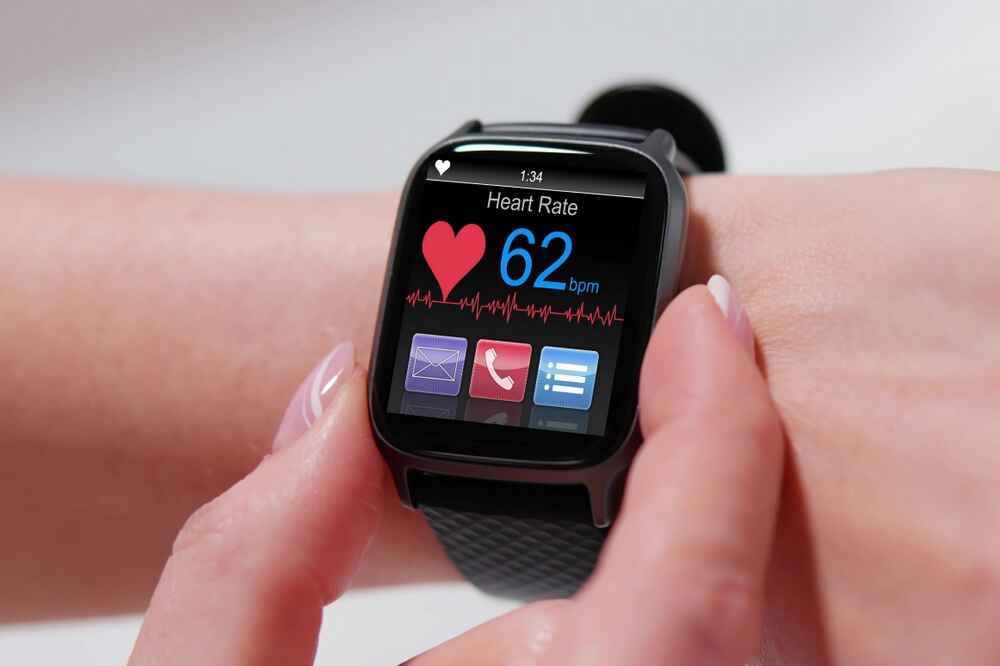 Let’s be clear: a $50 fitness tracker won’t match a $300 Garmin’s accuracy. But here’s the thing—it doesn’t need to. If your heart rate during a run is 165 bpm and your cheap watch says 172, that 4% error probably won’t derail your fitness goals. But if it’s reading 195 while you’re at 165? That’s a problem.
This principle — that the right tool for the specific use case matters more than having the most powerful option available — applies across all technology decisions. Our comparison of Claude vs ChatGPT for practical everyday tasks reaches the identical conclusion: match the tool’s capability to your actual requirements rather than theoretical maximum performance.
Optical HR Sensor Limitations
Budget optical heart rate sensors struggle during high-intensity interval training. In my HIIT testing, the Mi Band 8 showed errors of ±15-18 bpm when my actual heart rate (per chest strap) was fluctuating rapidly between 120-180 bpm. During steady cardio, that same watch was only ±8 bpm off.
Factors Affecting Accuracy:
- Watch fit: Too loose = wildly inaccurate readings
- Skin tone: Darker skin absorbs more green LED light, reducing accuracy
- Tattoos: Can block light completely in tattooed areas
- Cold weather: Poor circulation degrades sensor performance
- Arm movement: HIIT, weight lifting creates motion artifacts
When Budget HR Is Good Enough:
- General fitness and calorie estimates
- Zone awareness (am I in cardio zone?)
- Trend tracking over weeks/months
- Motivation through data
When You Need Better:
- Serious interval training (VO2 max workouts)
- Medical heart condition monitoring
- Race pacing for competitive events
- When ±2-3 bpm accuracy matters
GPS Drift Expectations
Budget GPS watches (even with built-in GPS) can show ±3-5% distance errors. My Amazfit Bip 5 measured 5.03km on my 5K loop—excellent, but still 30 meters off. Over a marathon, that same 0.6% error becomes 250 meters.
For casual running and general fitness, ±3-5% is completely acceptable. For race training where pace precision matters, consider that $250-300 Garmin option.
Final Verdict: Best Value Fitness Smartwatch for Most People
After testing eight budget smartwatches for 30 days, the Xiaomi Mi Band 8 ($40) wins for best value. It delivers solid heart rate accuracy (±8% during cardio), excellent battery life (9-11 days real use), and reliable sleep tracking—everything most people need for $40. The app is dated but functional.
If you can spend $20 more, the Amazfit Band 7 ($65) adds a significantly better app (Zepp), more workout modes, and direct Strava sync—worth it for active users.
Need built-in GPS? The Amazfit Bip 5 ($120) is your best bet under $150, delivering ±3% GPS accuracy and 6-7 days of battery with regular GPS workouts.
The same professionals who use all-in-one platforms like HQPotner to manage business workflows are often the same people using smartwatches to monitor activity, track stress through HRV data, and maintain the physical energy that sustains professional performance. The right watch at the right price makes that habit frictionless.
Final Buying Tips:
- Buy from Amazon for easy returns—test accuracy in your first week
- Don’t trust battery claims—expect 50-60% of advertised life
- Check app reviews before buying—you’ll use it daily
- If serious about training, add a $60 chest strap to any budget watch
Frequently Asked Questions: Budget Fitness Trackers
Are cheap fitness trackers accurate?
Budget fitness trackers ($40-150) typically achieve ±5-10% heart rate accuracy during steady cardio and ±3-5% GPS accuracy, which is adequate for general fitness tracking. They struggle with high-intensity intervals (±15-25% HR error) and aren't medical-grade devices. For casual fitness goals and trend tracking, they're accurate enough. For serious training or medical needs, invest in premium devices ($250+) or add a chest strap.
Do I need GPS on my fitness tracker?
You need a built-in GPS if you run, cycle, or hike without your phone and want accurate distance and pace tracking. Connected GPS (uses phone's GPS) works fine if you always carry your phone during workouts. Built-in GPS adds $50-80 to the watch cost and reduces battery life by 40-60%. For gym workouts or phone-accompanied runs, skip GPS and save money.
Which budget fitness tracker has the best app?
Amazfit's Zepp app (4.4★ iOS, 4.1★ Android) is the best companion app for budget trackers, offering fast performance, a clean UI, and seamless Strava/Google Fit/Apple Health sync. Xiaomi's Mi Fitness app (4.2★ iOS, 3.9★ Android) works but has slower load times and occasional crashes. Huawei Health has good features but limited third-party integration (no Strava).
Can I use a budget smartwatch with an iPhone?
Yes, most budget smartwatches work with iPhone (iOS 13+). Xiaomi Mi Band 8, Amazfit models, and Huawei watches all have iOS companion apps. Features like notification handling work, but Apple Watch integration (iMessage replies, Siri) isn't available. Check specific iOS compatibility before purchase—some older budget models support Android only.