











































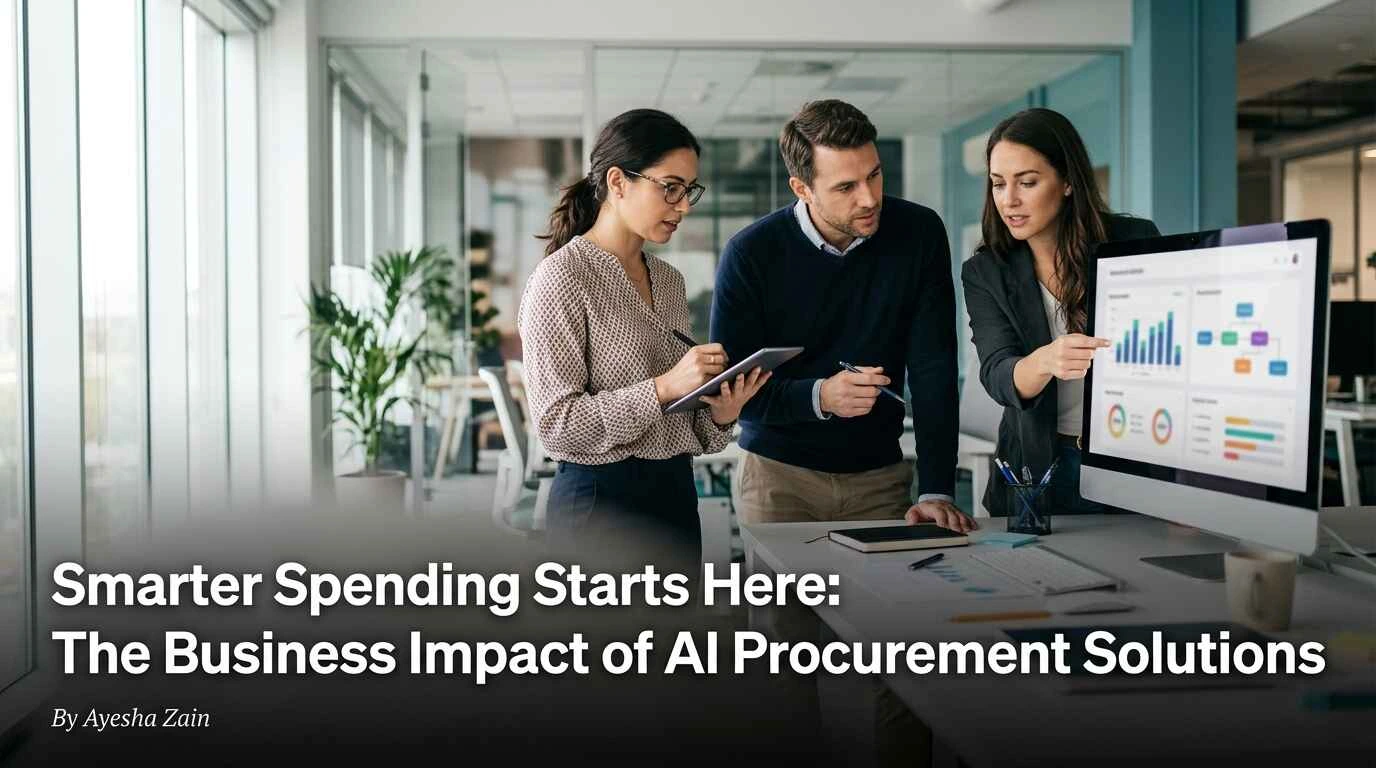
Firms now face the issues of increased expenses, complicated interactions with suppliers, and requirements for increased financial transparency. The procurement processes at most firms are still manual, which makes the process inefficient, involves long approval processes, and uses separate systems where spending is hard to control. In order to solve the mentioned problems, AI Procurement Solutions are used.
With the application of artificial intelligence technology, procurement will not be seen as just an administrative function but a business capability that uses technology such as automation and analysis to save costs, create supplier relationships, and make good procurement decisions.
Advantages of Using AI Procurement Solutions
 AI-based procurement solutions involve artificial intelligence, machine learning, and data analytics to automate the purchasing process. The companies will have the capacity to process their procurement requests, evaluate their suppliers, evaluate their contracts, manage their costings, and optimize their processes.
Whereas traditional solutions depend on manual methods, AI procurement solutions will be able to analyze the data and provide meaningful insights from the analysis. The organization will be able to use the data to evaluate its choices.
Businesses having a lot of departments, suppliers, and contracts will be able to structure their procurement process. Also, it will be possible for the employees to follow the company’s procurement policies without any complex procedures.
1. Reduce Cost and Save Money
Cost savings are one of the main responsibilities of the procurement teams. However, companies often have extra payments related to duplicate orders, price inconsistencies, unapproved suppliers, and missed savings opportunities from contracts.
AI procurement solutions can help to solve these issues. The team will be able to analyze spending, evaluate previous orders, compare prices provided by suppliers, and identify opportunities for purchase consolidation.
For instance, the AI-based solution can identify software subscriptions that are similar and are used independently by several departments. Then, the procurement team will be able to evaluate the possibility of the orders’ consolidation and, therefore, reduce the cost.
The process of automation can assist in reducing the time required for collection of information and processing of requests. Therefore, the purchasing department will have more time to focus on negotiating and sourcing.
2. Get Better Spending Transparency Across Multiple Departments
Without understanding how and where money is spent, companies cannot manage their expenses. This can be an issue if all the purchasing information is spread among spreadsheets, contracts, and different software solutions.
Procurement solutions with the application of artificial intelligence will enable gathering procurement data and understanding expenditure. The company’s management will be able to analyze the purchase requisitions, relations with the suppliers, conditions of the contracts, and utilization of the budget.
This will allow discovering any abnormal spending patterns, tracking the budget limits, and identifying ways to improve financial planning.
For example, during the analysis of the purchasing activity of the finance team, it might be discovered that some of the expenses regularly exceed the budget plans. This additional information will allow us to find out the reason and implement necessary controls.
3. Optimize Purchasing and Approval Workflows
Manually executed purchasing procedures can delay the company’s operations. The employees will have to wait for the approvals, find appropriate forms, and communicate with other departments to find out the further actions in purchase request processing.
AI-based procurement platforms will allow streamlining these procedures by guiding the employees in the process of request submission, organizing the information automatically, and submitting requests to appropriate people.
AI-powered intake capabilities will allow understanding the requests made in natural language and defining the appropriate purchasing procedure. Workflow routing and automated notifications will minimize the need for additional communication.
All these capabilities will decrease the time spent on procurement while making the procedure easier for employees.
Levelpath platform will enable discovery of procurement workflows that are native to AI.
4. Manage Suppliers & Reduce Risks
 Supplier relations may affect the continuity of the business, the quality of the product, & the performance of the company itself. Although getting a product from the cheapest supplier helps to save money, it also brings risks to the business.
AI procurement solutions will help procurement teams analyze data about the supplier, pricing, terms of the agreement, supplier’s performance, and risk factors.
The opportunity to spot the issues with expiring of the contract, inconsistencies in the supplier information or additional analysis will help procurement teams to do due diligence before the purchase.
Knowing the full picture about the supplier will help procurement teams to conduct more efficient negotiations. The analysis of the current commitments and performance of the supplier will help to develop alternative solutions and the sourcing strategy.
While AI will assist in identifying the risk, human intuition will remain an essential part of decision-making in business.
5. Make Procurement Decisions Based on Solid Information
Procurement is not just about order placement. The company should get reliable information for making a decision regarding the choice of suppliers, budget distribution, and development of the sourcing strategy in line with the goals of the organization.
With the help of AI and data analytics, the procurement team will be able to analyze spending patterns, compare suppliers, and find cost-saving opportunities. Predictive capabilities will help with demand planning based on the historical data.
The availability of such information will help procurement leaders to move from reactive procurement to proactive resource management.
Thanks to the integration of procurement information in all departments, finance, legal, and sourcing teams will be able to collaborate better. Such information will help to make consistent decisions.
6. Formulate an Effective Purchasing Strategy
 With organizational growth, procurement practices become increasingly complex. This is due to the increasing number of staff, vendors, contracts, and sites at which the business operates.
With AI-based procurement solutions, it will be easier for the organization to streamline processes, automate repetitive activities, and implement consistent purchasing controls in the organization.
Activities like the ones related to request management and workflow management will be the initial steps that the organization will take before moving to more advanced levels of automation which have more policy, information, and control support.
It is expected that the organization will find it possible to evaluate the effectiveness of the procurement process using efficiency, compliance, cost savings, and implementation.
Conclusion
Efficient procurement begins with increased information, enhanced processes, and enhanced control over the purchase decision process. AI procurement software will allow for reduced costs, increased transparency in procurement, faster approvals and increased control over suppliers.
Due to an intelligent and integrated procurement approach, companies will be able to decrease administrative workload and increase the time of working on strategic activities for their employees.
The company Levelpath offers an AI-enabled procurement solution which integrates procurement requests, processes, suppliers and business decisions.
About The Author:
Ayesha Zain is a technology and AI-focused content writer who enjoys exploring how new innovations shape the digital world. She researches emerging technology trends, tools, and breakthroughs, transforming complex topics into clear, engaging, and informative content for everyday readers. At TechAiTech, Ayesha covers artificial intelligence, software, gadgets, and emerging technologies, making complex ideas simple, accessible, and easy to understand. Her writing helps keep TechAiTech informative, reader-friendly, and trustworthy.